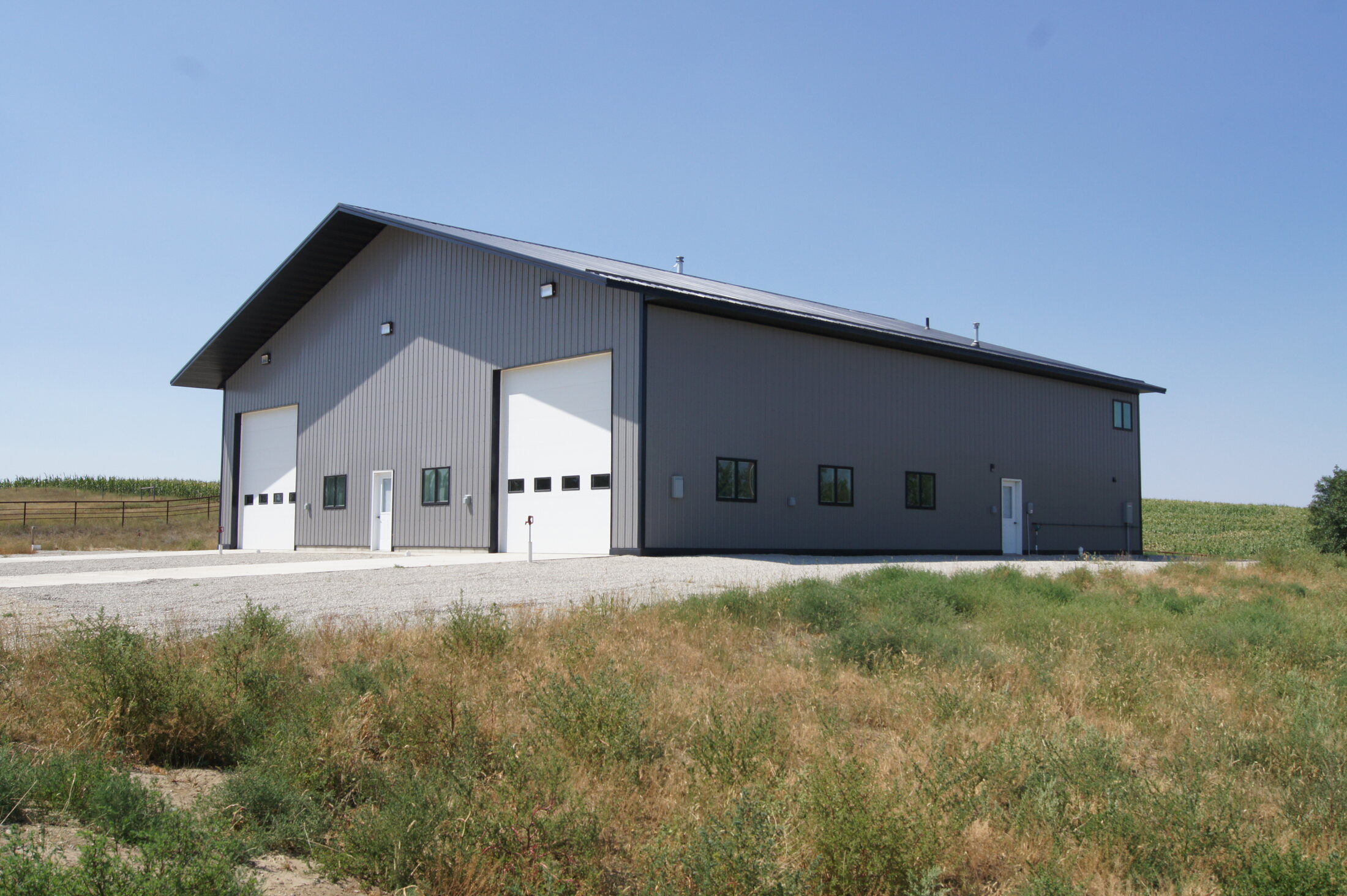
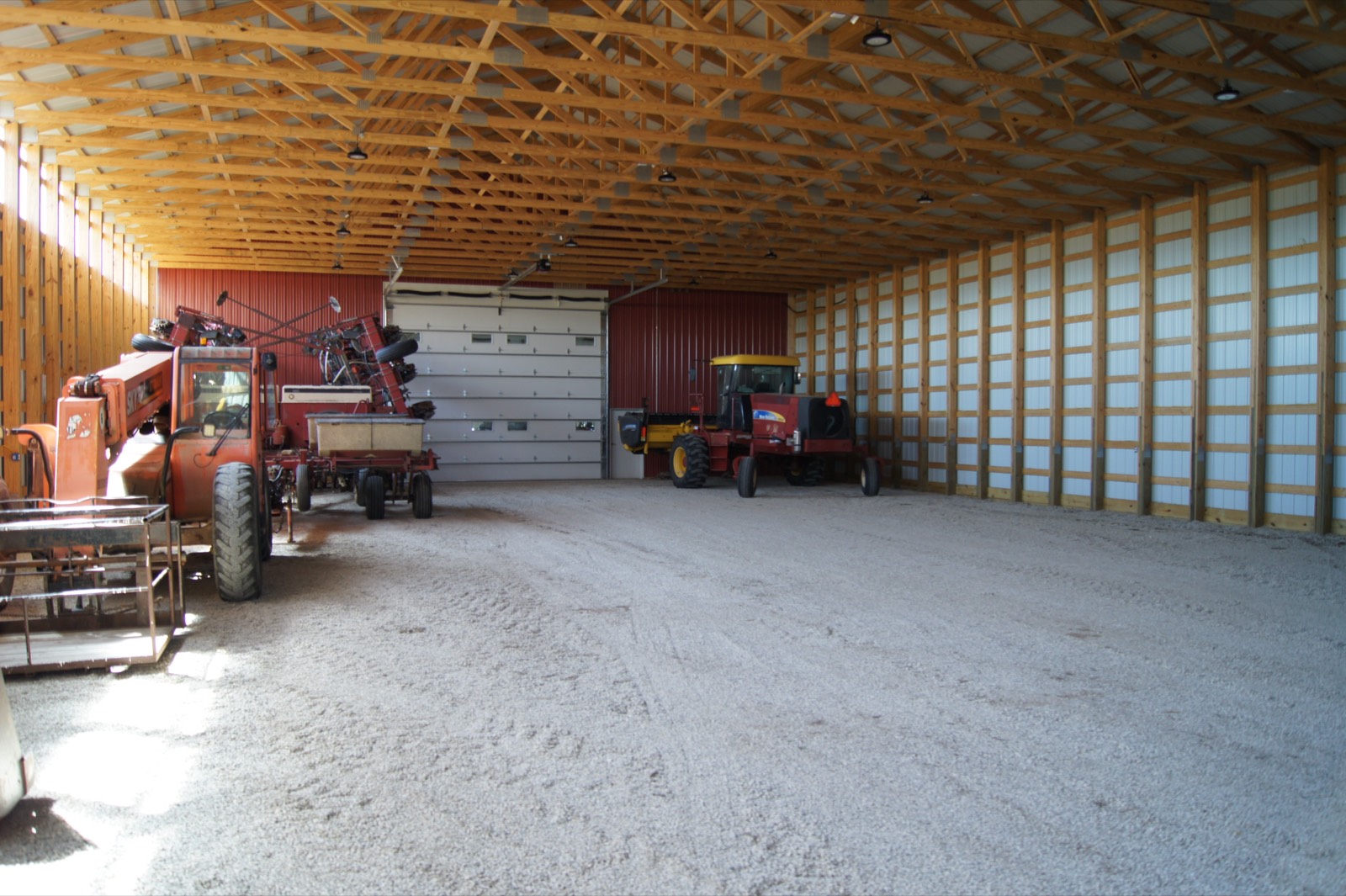
Most of what goes up out here falls into a handful of shapes. A machine shed for equipment that has outgrown the yard. A heated shop with a floor you can work on in January. A livestock building sized around how the animals actually move through it. An arena. A hangar. A warehouse for a business that stopped fitting in its old space.
Post-frame. Stud-frame where it makes sense.
Pole barn, post-frame, post frame building — the words get used loosely around here. What matters is which one suits the span, the site, and what the building has to do once it's standing.
If what you need isn't on this list, ask anyway.
First thing we ask is what's going in it.
What has to get through the door. How you get around it once the floor is full. What ends up parked in there two winters from now.
The size comes out of those answers. So does post-frame or stud-frame.
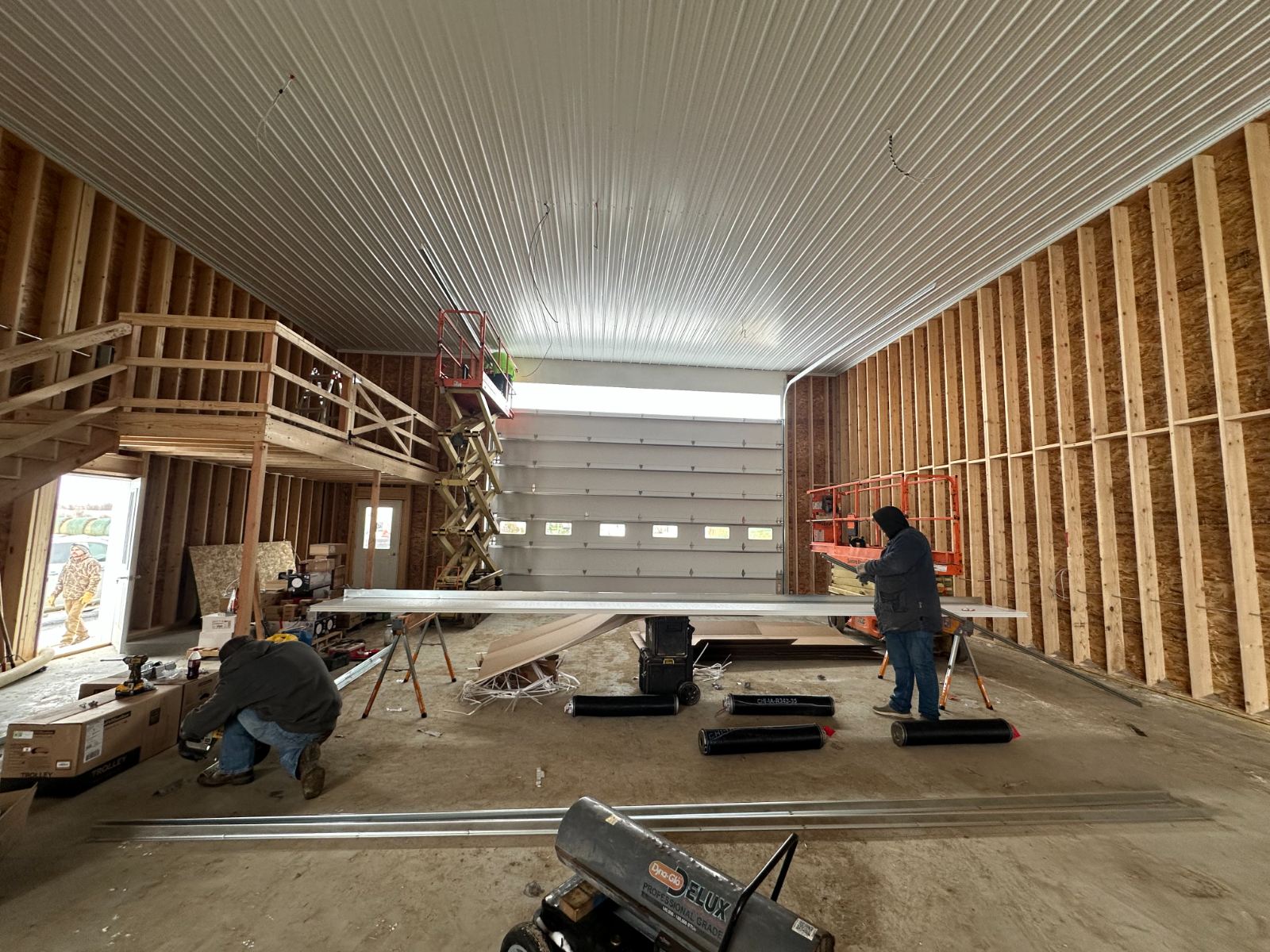
Most quotes in this business cover the shell. The building goes up, and then the concrete, the site work, the wiring and the finishing show up as separate numbers. That gap is where projects go sideways.
We tell you which parts we’re handling and which parts you’ll need to arrange, before you sign anything.
Usually ours: the structure, the materials, the crew, the doors and windows we agreed on, weatherproofing, and someone managing the job.
Usually separate: concrete, site prep and grading, permits and engineering, electrical, heating, interior finish, drainage.
Which side each item lands on depends on the job. What doesn’t change is that you’ll know before we start.
There’s no honest way to put one number on a building before we know what’s going in it. But the things that move the number aren’t a mystery, and you should know them before you call anyone.
Size and wall height. A taller building costs more per square foot than a longer one.
Snow and wind load. Western North Dakota carries real numbers here. It’s engineering, not a line item to trim.
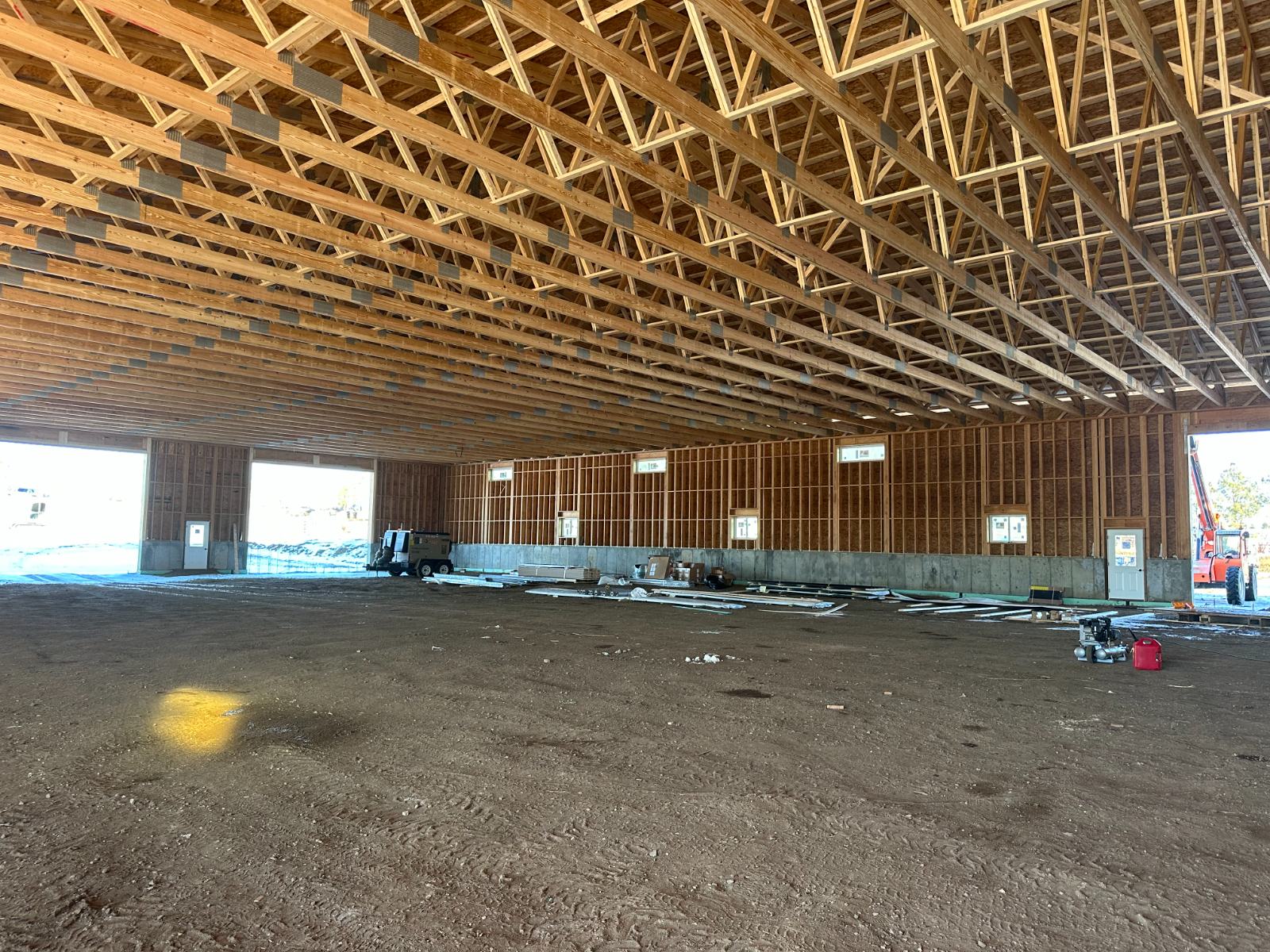
Insulation and heat. The difference between cold storage and a heated shop is most of the difference in cost.
Doors. Big overhead doors are expensive. How many and how wide changes the frame.
Slab. Thickness and reinforcement depend on what’s parking on it.
Site. Flat and dry costs less than sloped and wet.
When we quote, we walk through these with you. Not to pad the number — so you can see where it comes from.
We’re based in Dickinson and most of our work sits within a few hours of it.
Across western North Dakota that means Belfield, New England, Watford City, Williston, Bismarck and Minot, and the farms and businesses in between. Into eastern Montana it means Glendive, Sidney and Baker.
Distance changes the schedule more than it changes the price. A site four hours out gets built in longer stretches with fewer trips, and we tell you what that does to your window before you commit to it.
If your location isn’t on that list, ask. The answer is quick, and it’s honest either way — we’d rather tell you no on the phone than take a job we can’t crew properly.
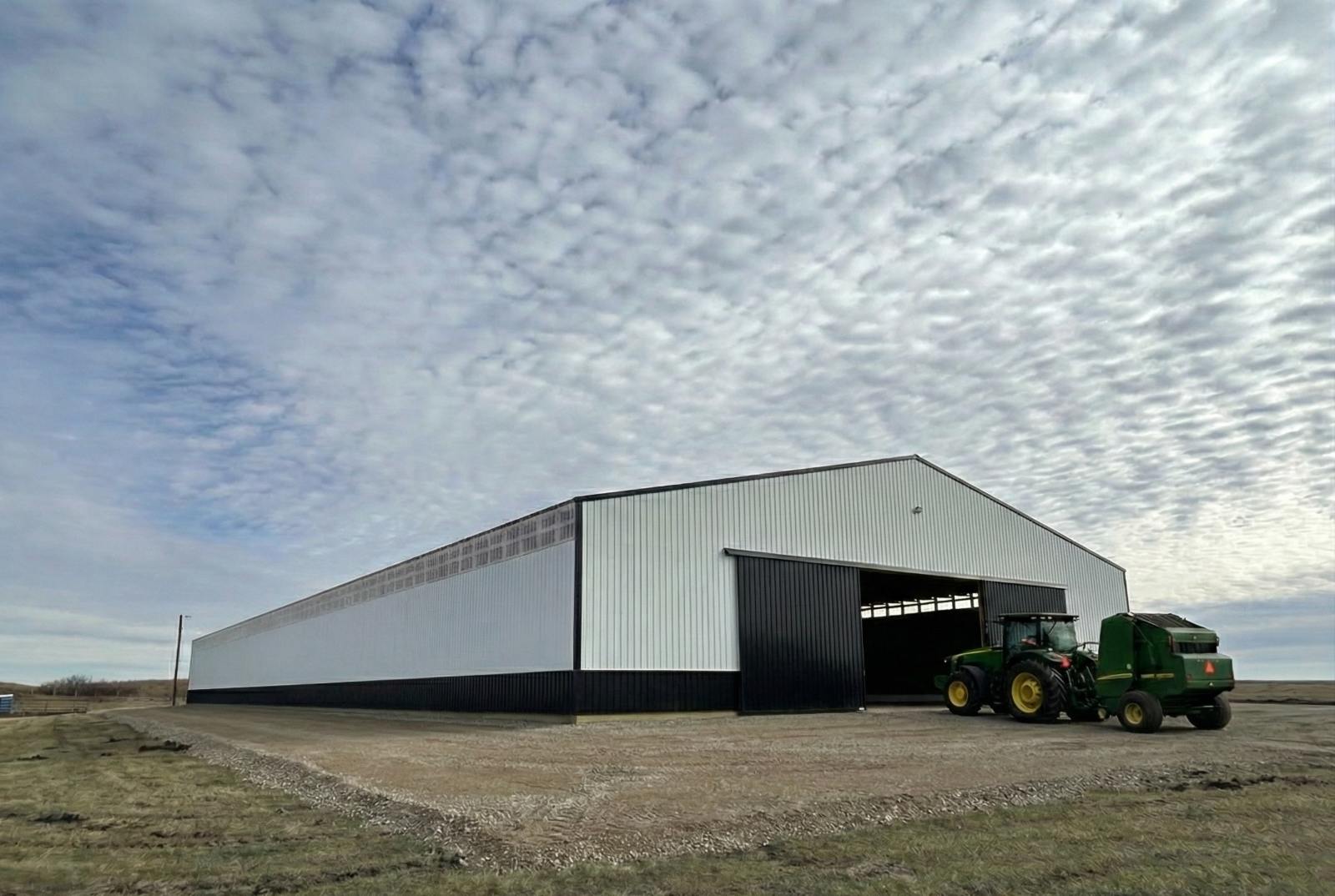
I went in with a drawing of what we were wanting and Alvin took that and put it on paper for us and ended up building exactly what we had in our heads.
Same questions we'd ask on the phone, written down. A rough idea is enough to start.
Or call us(701) 690-6224Sent. We've got you.
We'll ring you on the number you gave us. If you'd rather not wait, call (701) 690-6224.
We've Got You.